Resource Governance in Jira: The Professional's Guide
Most organizations believe they are "managing" their resources. They have dashboards, they track hours, and they assign tasks. On paper, the portfolio looks balanced. But for the PMO Lead, the reality is different.
The reality is the "Planning Lie."
It is the moment you realize a project is marked "Green" on the dashboard, yet it is fundamentally failing because your critical-path expert is secretly over-allocated across three different "priority" initiatives. It is the systemic gap between what is scheduled and what is actually possible.
When you rely on reactive management, the consequences are not just "delayed dates." They are systemic. It is the "Death March" — where high-performers are punished with more work until they burn out and leave. It is the erosion of professional credibility when you have to tell a stakeholder for the third time that a "firm" deadline has slipped, not because of a lack of effort, but because of a collision of resources you didn't see coming.
This cycle of "Plan - Collision - Firefight - Apologize" is not a failure of the people; it is a failure of the framework.
There is a way to stop the firefighting. By shifting from reactive Resource Management to Deterministic Resource Governance, you can finally replace guesswork with mathematical certainty.
The 3 Pillars of Resource Governance
To move from firefighting to forecasting, a PMO must implement three foundational pillars. Without these, any tool is simply a faster way to create an inaccurate plan.
Pillar 1: Deterministic Capacity Against "The Phantom Availability"
The Problem: The "Input Trap" and the 40-Hour Myth. Most planning fails because it treats all inputs the same. In a typical Jira environment, "Required Project Hours" are mixed in with meetings, corporate noise, calendar exceptions, and other commitments. When these distractors are fed directly into the planning process without a filter, the result is a "Lying Plan" — a schedule that looks perfectly balanced on a dashboard but is mathematically impossible to execute.
This is why projects that are "Green" on Monday suddenly turn "Red" by Wednesday; the plan was based on theoretical capacity, not deterministic reality.
The Governance Approach: Professional governance replaces this reactive flow with a Governance Filter. Instead of assuming a flat 40-hour week, the filter isolates the "Noise" to reveal the True Effective Capacity.
By separating the valid project requirements from the systemic distractors, you can perform a planning step based on actual availability. This results in a Deterministic Plan — one where the deadlines are grounded in reality, and the resource load is sustainable.
Pillar 2: Baselines vs. The "Moving Target" Syndrome
The Problem: Chasing the "Moving Target." Across almost every project management environment, when a date slips, the instinctive reaction is to move the date. This "Moving Target" approach is a systemic error. By simply updating the ticket to reflect the new reality, the manager deletes the evidence of the slippage and creates a false sense of progress.
When you simply update the date, you aren't managing a project; you are just updating a calendar. The history of why the slippage occurred is lost, and the project enters a cycle of "permanent rescheduling."
From a resource governance perspective, this is even more dangerous. A date is not just a marker on a calendar; it is the boundary of a Committed Allocation Window.
When a task is moved without a formal re-allocation process, it drifts out of the window where the resource was actually committed. The project then begins to rely on "Phantom Availability" — assuming the resource is available in the new window, even though they were never allocated for it. This is not a "date change"; it is a Resource Drift that inevitably leads to collisions and missed deadlines.
The Governance Approach: Professional governance requires a Dual-Track Baseline. A baseline is not merely a "snapshot" of dates; it is a locked contract of both time and capacity.
- The Timeline Baseline: Tracks the promised Start and Finish dates.
- The Allocation Baseline: Tracks the specific resource commitment (e.g., Resource A is committed for 20h/week from Oct 1 to Oct 15).
In a governed system, the signal for failure is not just a date slip, but a Baseline Breach. A breach occurs the moment a task's planned timeline extends beyond its committed allocation window.
This distinction is where the professional toolset becomes essential, especially when managing a complex portfolio with dozens or hundreds of resources across parallel initiatives:
- Resource Availability: Portfolio-level tools for viewing the project layout versus committed capacity allow you to see the broad availability of your workforce.
- Committed Allocation: Portfolio-level resource allocation and scheduling tools allow you to lock and track the specific allocation windows.
When a task breaches its window, the Governor doesn't just move the date; they trigger a Re-allocation Event. This forces a decision: Do we extend the resource commitment, or do we move the task to a window where the resource is actually available? This is the difference between updating a calendar and governing a portfolio.
Pillar 3: Cross-Project Portfolio-Level Synchronization
The Problem: The "Siloed" Resource. The most dangerous blind spot in a portfolio is the "Hidden Over-allocation." An expert is "Available" in Project A, but they are the "Critical Path" in Project B. Because these are separate Jira boards, the collision is only discovered when the work doesn't get done.
The Reactive Path: The "Siloed" Collision
In a reactive environment, the Project Manager's view is a bubble. While the PM manages the committed plan, "Invisible Inputs"—such as last-minute sick leave, urgent absences, or change requests from other projects — bypass the plan and hit the resource directly.
The collision occurs at the point of execution, resulting in unplanned rescheduling and firefighting.
The Governance Approach: Professional governance requires a Single Source of Truth for resource allocation. Instead of separate boards, the portfolio is managed through a centralized synchronization layer.
The Governed Path: Portfolio Synchronization
In a governed environment, all inputs — commitments, requests, and availability shifts — are routed through a Portfolio-Level Management tool. This ensures that the Project Manager's view is always a reflection of deterministic reality, not a siloed assumption.
- Portfolio Visibility: Seeing the total load of a human resource across all initiatives.
- Collision Detection: Identifying when two "Priority 1" projects are competing for the same 10 hours of a specialist's time.
The Implementation Gap: Why "More Jira" Isn't the Answer
Before discussing the solution, we must address a hard truth: For most medium-to-large organizations, Jira is a best-in-class ticket tracker. It is an incredible engine for managing the state of a task (To Do - In Progress - Done) and ensures that not a single piece of work slips through the cracks. However, there is a critical gap between tracking a ticket and governing a project portfolio and a resource pool.
Bridging this gap requires a deterministic governance engine — a system that can tell you why something is happening and predict a collision before it occurs. To understand why this is so difficult, we have to look at the human cost of the gap.
The Monday Morning Crisis: The Story of Lucy
Lucy is a PMO Administrator for a growing enterprise. On Friday afternoon, she spent three hours finalizing the resource plan for the next sprint. She checked the dashboards, confirmed the allocations, and went home feeling confident that the plan was stable.
Monday morning arrives. Lucy opens her inbox to find 42 unread emails:
- Three "urgent" requests from the VP of Sales to pull a developer for a "critical" demo.
- A notification that a senior architect has taken unplanned sick leave.
- Five "minor" date changes from project leads who "just needed to shift things by a few days."
Lucy opens her resource management app in Jira. She expects to see the plan she finalized on Friday. Instead, she sees a completely different reality.
Because the users moved the dates in their tickets, the "truth" in the tool shifted automatically. There is no baseline to compare against, so there is no "alert" that a breach has occurred. The plan has drifted.
Lucy isn't managing a portfolio; she is managing a disaster. She spends the next six hours in "firefighting mode" — jumping between calls, apologizing to stakeholders, and manually recalculating availability on a spreadsheet.
Lucy's problem isn't a lack of effort, and it isn't a lack of tools. Her problem is that she is trying to use a ticket tracker to perform deterministic governance.
The "Ticket Tracker" Trap
The fundamental issue is that issue trackers like Jira were, and still are, state machines. They were designed to tell you what is happening to a piece of work and track it persistently until the work is done.
When you rely on native ticket tracking for resource management, you are essentially "hoping" that the data entered by users is accurate and synchronized. In a complex portfolio, this hope is a strategy for failure.
The "Automation Hell" Trap
Many organizations attempt to bridge this gap by building complex "scheduling engines" using Jira Automation rules. They create chains of logic: "If Ticket A moves, then update Resource Allocation B, and notify Project Manager C."
This, in turn, leads to Automation Hell. As the number of projects and resources grows, these rules become a fragile web of dependencies. A single unexpected change can trigger a cascade of automated updates, creating "infinite loops" of rescheduling that leave the PMO even more confused than before.
You cannot build a deterministic scheduling engine using a tool designed for ticket transitions. To stop the firefighting, you need a tool that treats the Resource Allocation as the primary anchor, not the ticket date.
The Professional Solution: Bridging the Gap
To stop the firefighting and move from reactive management to deterministic governance, you need a system that treats the resource allocation as the primary anchor of the project, not an afterthought of the ticket.
The professional solution is a governance layer that sits atop your execution tools, transforming the "Planning Lie" into a predictable reality. Here is how the three pillars of governance are translated into technical capabilities:
Mapping Governance to Capability
| Governance Pillar | Product Feature | Strategic Value |
|---|---|---|
| 1. Deterministic Capacity | Resource Management for Jira: The Resource Pool | Centralized Governance: By isolating the "noise" and calculating true effective capacity, you replace theoretical 40-hour weeks with mathematical certainty. |
| 2. Baseline Variance | MSP Planner for Jira: Baseline Tool | Variance Analysis: By locking the "original promise" and tracking the delta, you turn a date slip into a governance signal, identifying systemic drift before it becomes a failure. |
| 3. Portfolio Sync | Resource Management: Scheduling Engine | Portfolio Intelligence: By routing all project demands through a single synchronization layer, you eliminate "hidden over-allocations" and prevent collisions before they occur. |
From "Updating Calendars" to "Governing Portfolios"
When these three capabilities work together, the experience for the PMO changes fundamentally.
Instead of spending Monday mornings in "firefighting mode," the Governor starts the week by reviewing the Variance Report. They can see exactly which projects have breached their allocation windows and which resources are drifting.
Because the system is deterministic, the Governor doesn't ask, "Why is this late?" They ask, "How do we re-allocate the commitment to resolve this breach?"
This shift — from asking "Why?" (Reactive) to deciding "How?" (Governed) — is the difference between a team that is constantly stressed and a portfolio that is consistently on time.
The Workflow of Truth: Portfolio Governance in Action
To move from firefighting to forecasting, a PMO must replace "hope" with a deterministic workflow. The following process illustrates how a professional governance engine transforms a simple resource request into a locked, trackable commitment.
1. The Commitment Cycle: From Request to Baseline
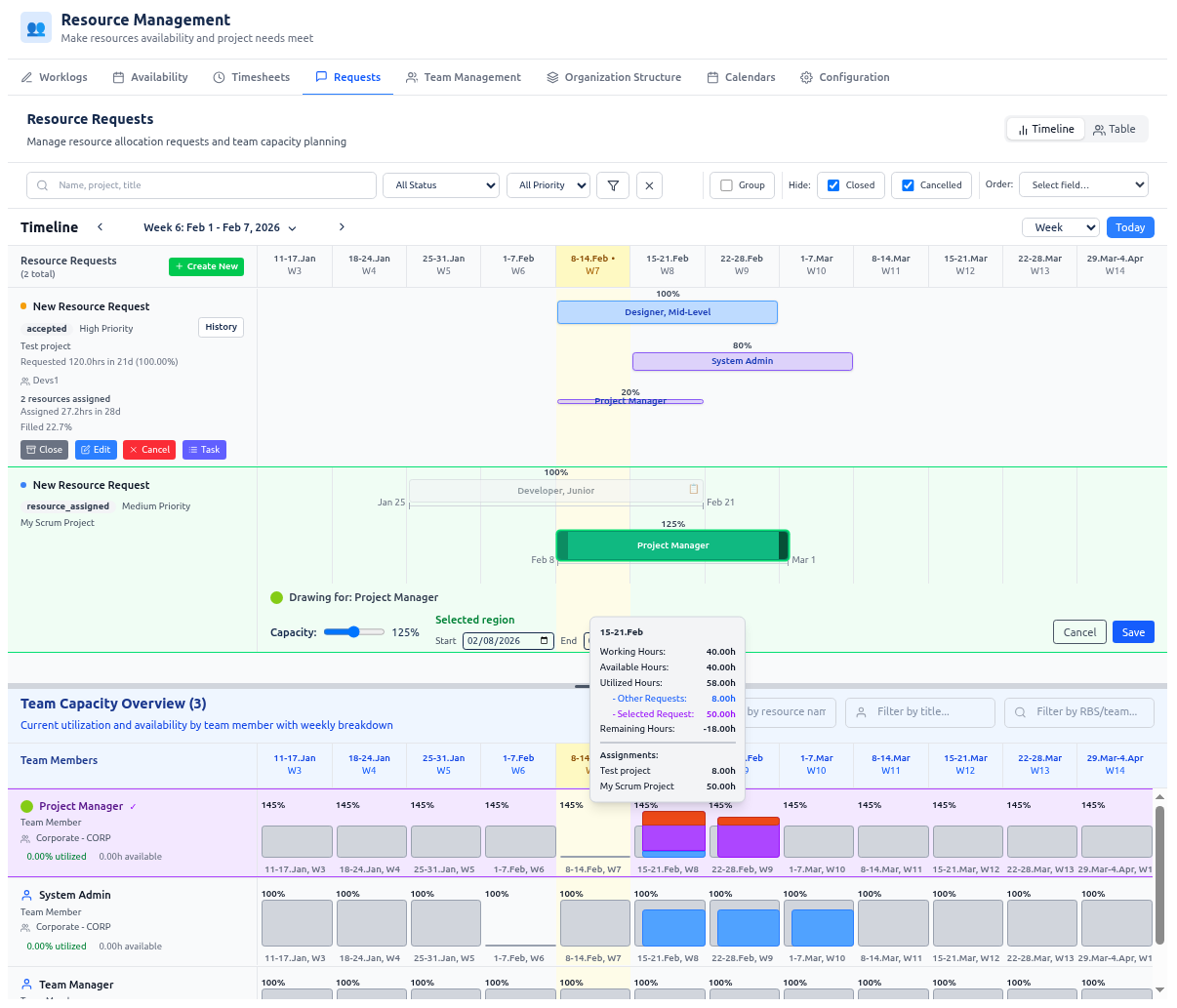
In a reactive system, a request is an email or a Slack message. In a governed system, a request is a formal data object.
- The Mechanism: The request specifies the required skill, the effort (hours), and the desired window.
- The Value: This creates an audit trail of demand before it becomes a collision.
Before a request is approved, the system performs a Deterministic Capacity Check:
- The Mechanism: The request is matched against the Resource Pool, which accounts for true effective capacity (excluding meetings, corporate noise, and pre-existing commitments). Over-allocations are immediately detected and flagged.
- The Value: You no longer "hope" the resource is free; you know if the capacity exists.
Once accepted, the request is converted into a Committed Allocation Window.
- The Mechanism: This is a locked baseline in the system. It reserves the resource's time specifically for this task's requirements.
- The Value: This window becomes the "Contract of Promise" between the PMO and the project team.
2. The Execution: Syncing to the Field
The commitment is then synchronized with the execution tool. Rather than replacing Jira, the governance layer operates as an intelligent overlay—using tools like MSP Planner for Jira — to provide a professional scheduling interface directly on top of the standard Jira environment.
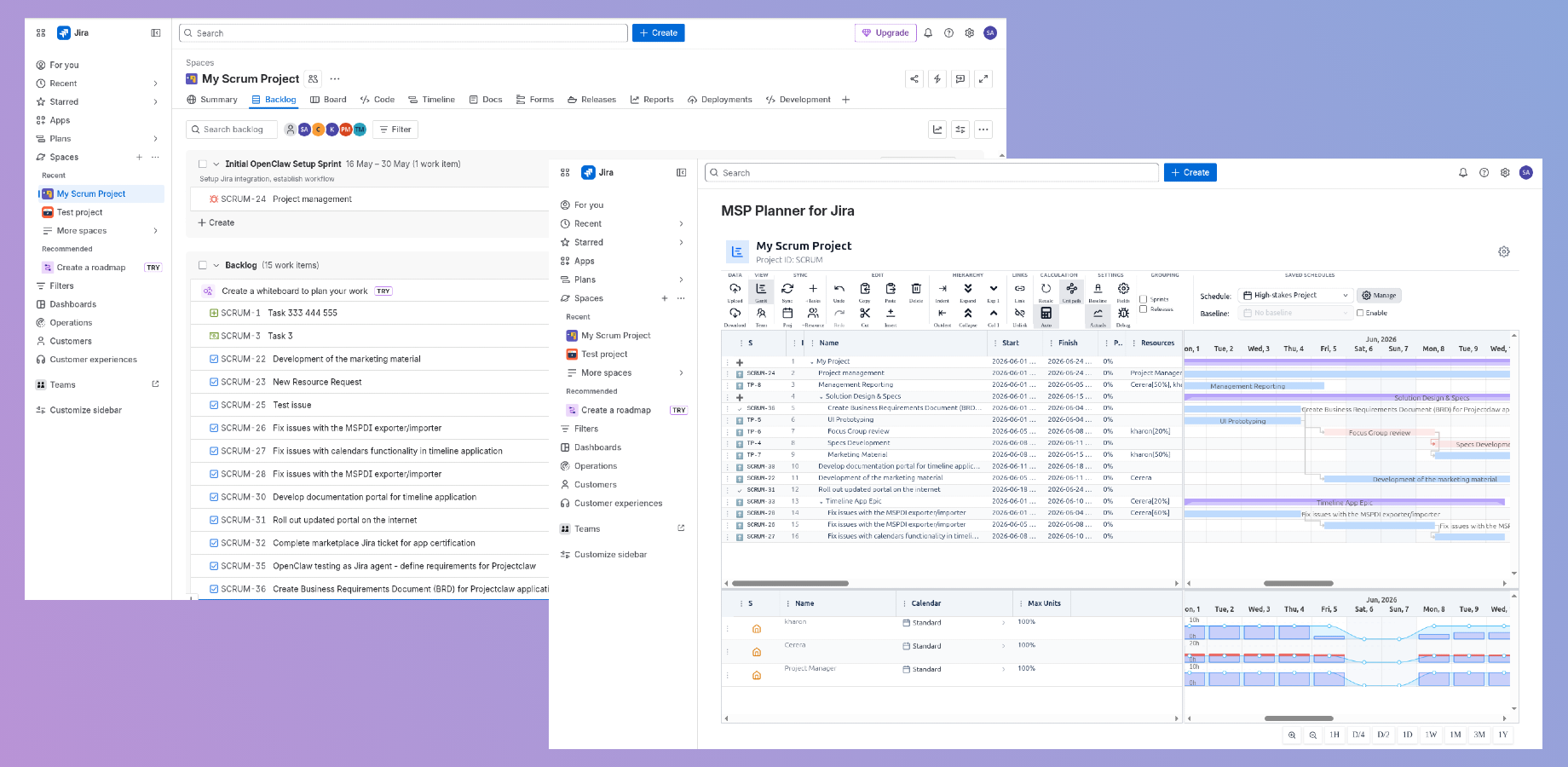
- The Mechanism: The task is scheduled in the project plan based on the locked allocation window, appearing natively within the team's workflow. The system constantly compares the live plan against the baselines to detect date violations.
- The Value: The project team works within a window that has already been mathematically validated. The PM can instantly see the delta between the allocated capacity and the actual plan requirements, allowing them to identify exactly when a resource allocation change is required.
3. The Signal: Detecting the Baseline Breach
The "Moving Target" syndrome is defeated when the system stops relying on manual updates and starts relying on automatic signals.
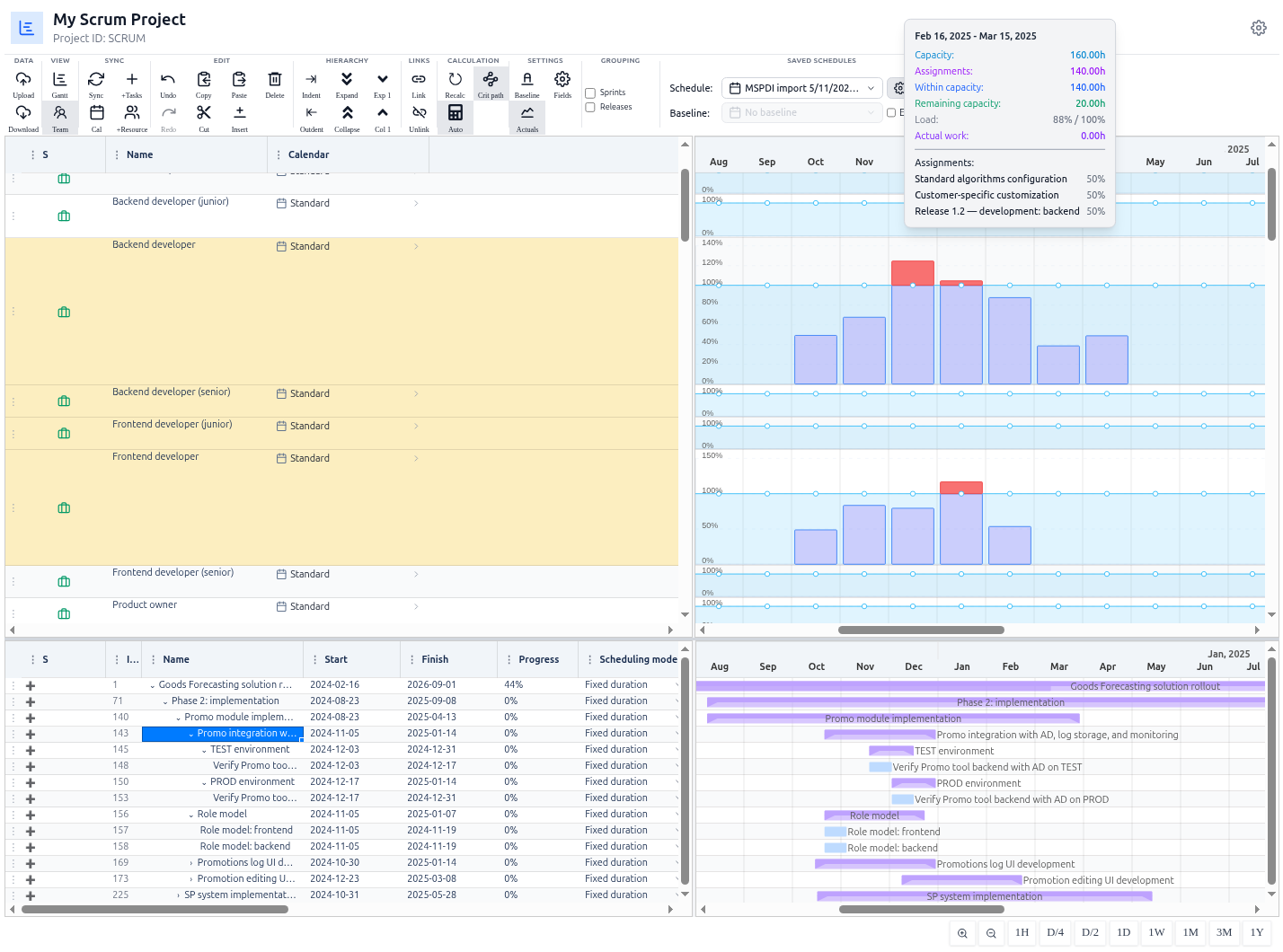
- The Mechanism: The system continuously monitors the gap between the Task Timeline (where the task is actually moving) and the Allocation Window (where the resource was promised).
- The Signal: The moment a task's date shifts beyond its committed window, the system triggers a Baseline Breach Alert.
- The Value: Instead of a "quiet date move" that is only discovered during a monthly review, the PMO receives an immediate signal that a commitment has been broken.
4. The Governance Loop: The Portfolio Helicopter View
Individual breaches are signals; the Governance Loop is where those signals are turned into strategic decisions.
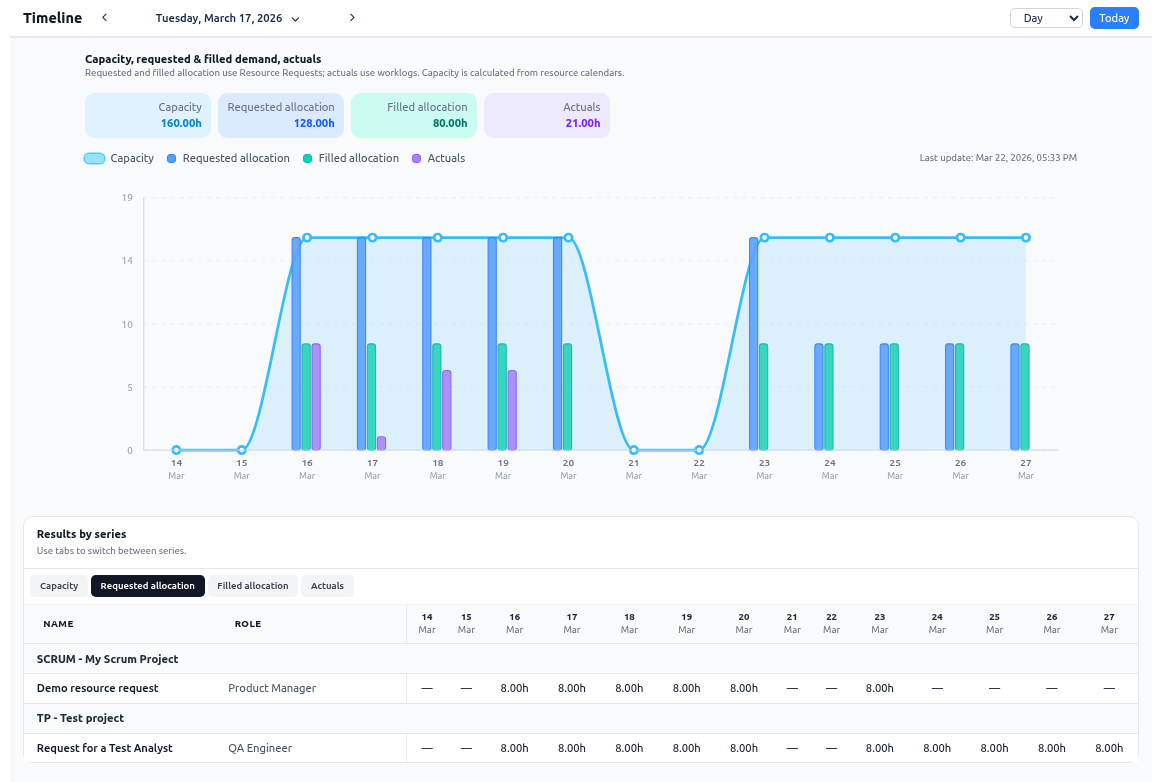
- The Mechanism: All baseline breaches and allocation variances are aggregated into a portfolio-level analytics dashboard. This allows the Governor to see patterns — such as a specific team consistently breaching their windows or a specific project drifting systematically.
- The Value: The PMO shifts from "micro-managing tasks" to "governing the portfolio." They can identify systemic risks and resource bottlenecks before they result in missed deadlines.
5. The Resolution: The Re-allocation Event
The breach triggers a professional decision process rather than a firefighting session.
- The Decision: The Governor must decide:
- Extend the Commitment: Formally increase the resource's allocation window to cover the drift.
- Reschedule the Task: Move the task to a new window where capacity actually exists.
- The Result: The portfolio remains deterministic. Every change is a conscious decision, not an accidental drift.
Summary: The Governance Chain
This is the "Workflow of Truth." It ensures that the plan on the dashboard is not a "Planning Lie," but a reflection of a locked, validated, and governed reality.